Identity Governance Doesn’t Have an Automation Problem. It Has an Understanding Problem.
Identity teams don’t lack tools. They lack the one thing every decision depends on — a clear view of what’s actually true.
Read Now


Identity teams don’t lack tools. They lack the one thing every decision depends on — a clear view of what’s actually true.
Why does this person have access? What created it? What changed recently? These questions surface constantly — in audits, certifications, incident response, and the daily work of keeping access clean. And the honest answer is too often: we’re not sure. The information exists, but it’s scattered across systems, buried in relationships, and impossible to see at a glance.
People don’t want the search. They want the answer.
That’s the idea behind Clear View AI — shining a light on what you really need to know, so you can govern with clarity instead of guesswork.
NEW WHITE PAPER
Identity Governance Has an Understanding Problem: See how Clear Skye replaces guesswork with clarity — without sacrificing the trust, auditability, and human judgment your program depends on.
-------------------------------------
Most organizations already have the tools they need: provisioning workflows, certification campaigns, policy frameworks. Yet identity teams remain overwhelmed. The reason isn’t execution — it’s understanding. When access looks unusual, someone has to piece together how it was granted, which roles and entitlements contributed, what approvals were involved, and what’s changed over time. As environments grow, the fog only thickens.
Identity teams don’t lack tools. They lack the knowledge those tools are sitting on. Identity governance has quietly become a clarity problem — and a bandwidth problem.
AI is usually pitched as the cure for complexity: automate the decisions, remove the humans. In identity governance, that introduces real risk. Access decisions affect security, compliance, and operations — you have to be able to explain why an access exists. A decision you can’t see into is hard to audit, and harder to trust.
The goal was never simply faster decisions. It’s decisions you can see, trace, and defend. As we’ve said before: AI doesn’t fix chaos. It amplifies it.
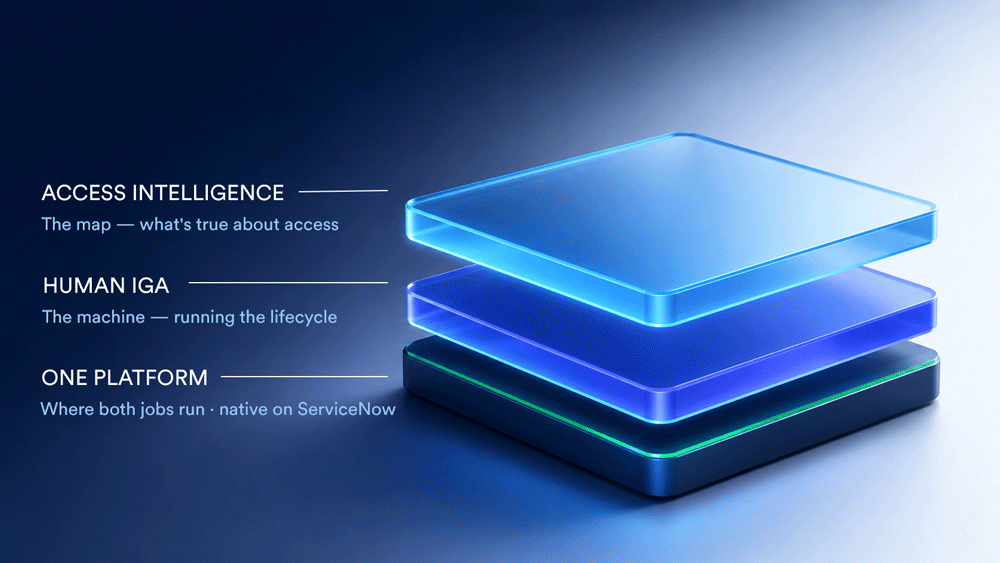
That’s why Clear Skye’s approach starts in a different place. Instead of automating approvals or replacing human judgment, Clear View AI brings clear, read-only intelligence into the work — so teams can see why access exists, what relationships shaped it, which policies applied, and what’s changed over time.
The result isn’t autonomous decision-making. It’s faster, more confident decisions, grounded in what’s actually true. And because it’s transparent, read-only, auditable, and human-in-the-loop, it doesn’t replace governance. It strengthens it.
Identity governance is usually framed as workflows — requests, approvals, certifications. But the real work happens in the looking: assembling evidence, tracing relationships, reconstructing context across systems. That’s where programs slow down — and it’s exactly the work Clear View AI is built to take off your plate.
Clarity is only as good as the context it can see. Traditional identity systems sit outside the core enterprise, so data has to be synchronized and context inferred after the fact. Clear Skye runs natively on the ServiceNow platform — connected to IT service management, security operations, risk, and the employee lifecycle. The payoff is simple but profound: the picture is already there. Nothing has to be reconstructed after the fact.
This matters more every year, because identity no longer means employees. It now includes service accounts, machine identities, groups, entitlements, and AI-driven processes — often the most complex and highest-risk access in the environment. As that landscape expands, the ability to see access clearly — instantly and accurately — stops being a convenience and becomes a control.
Identity governance is entering a new phase. The challenge is no longer enforcing access — it’s understanding it, quickly and confidently, at scale. Most vendors are racing to automate decisions. Clear Skye is focused on improving them — by making the knowledge behind them visible.
From control to clarity. From workflow to understanding. From guesswork to knowing.
Read Identity Governance Has an Understanding Problem to see how Clear Skye replaces guesswork with clarity — without sacrificing the trust, auditability, and human judgment your program depends on.